Our Story
From 2009-2012, Paul Farmer served as United Nations Deputy Special Envoy to Haiti, under the leadership of President Clinton. He then served as Special Adviser to the Secretary-General.
The work Paul Farmer led at the United Nations drew upon his thirty years of experience working in resource poor settings in his capacity as a Harvard University professor and co-founder of the NGO Partners In Health (PIH).
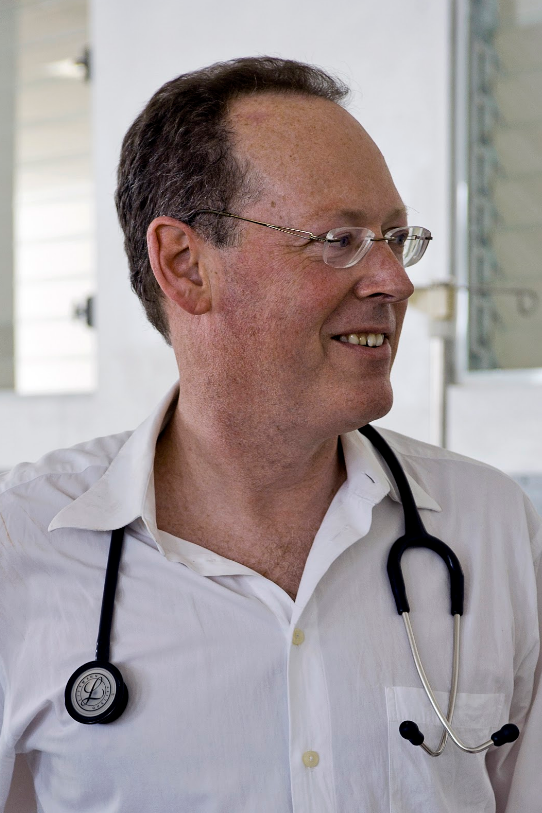
Photo credit: Behna Gardner
The UN office applied a concept developed by Dr. Farmer and his colleagues at Harvard University and Partners In Health — that there exists a science of implementation to health and development work. This approach that was conceived of at Harvard University to analyze global health strategies and codify those that were most effective was used at the UN to assess the effectiveness of official development assistance.
After a decade of serving as an Under Secretary-General at the United Nations, Paul Farmer is continuing the work of his UN team with the establishment of the Science of Implementation Initiative. The SII team advocates for the “science of implementation” which when applied to the efforts of bilateral and multilateral development entities suggests a rethinking of investment and implementation approaches that can lead to the dramatic reduction of poverty and disease in the poorest countries. When development investments are reimagined in this way, it is possible to create durable, high quality and effective public systems to deliver social services that reach all people.
The SII team collaborates closely with colleagues at the United Nations, Partners In Health and Harvard Medical School in a joint effort to further Dr. Farmer’s objective of creating an evidence-based approach to the delivery of official development assistance.
2009-2012
In response to the 2008 hurricanes in Haiti, Dr. Farmer was appointed as United Nations Deputy Special Envoy for Haiti under the leadership of President Bill Clinton. That role offered insight into the inner workings of bilateral and multilateral donors and the challenges they face implementing their humanitarian and development programs. Dr. Farmer’s team at the United Nations began tracking the $390 million of donor pledges, commitments and disbursements toward hurricane recovery. This tracking effort evolved to include the $13 billion in funding promised by donors following the 2010 earthquake in Haiti and the over $800 million following the cholera outbreak. In its donor tracking efforts Dr. Farmer’s team placed particular emphasis on how much development assistance stayed in Haiti.
REPORT: Lessons from Haiti
2013-2019
In December 2012, Dr. Paul Farmer was appointed UN Special Adviser to the Secretary-General on Community Based Health and Aid Delivery. In this capacity, Paul Farmer and his team worked closely with key partners and provided guidance on how to improve health and well-being in resource poor settings. Paul Farmer also helped galvanize support for the elimination of cholera in Haiti and the use of the oral cholera vaccine. His team used the data on the tracking of donor pledges, commitments and disbursements to advise on lessons learned about aid effectiveness and how those can be applied in Haiti and other settings. Dr. Farmer’s team also tracked donor pledges, commitments and disbursements toward Ebola recovery following the 2014 outbreak in West Africa.
Dr. Farmer and his team at the United Nations shared data on how best to implement official development assistance in the poorest countries.
2020-Present
The Science of Implementation Initiative (SII) was established by Dr. Paul Farmer to build upon the work of his team at the United Nations Office of the Special Envoy for Haiti (2009-2012) and the United Nations Office of the Secretary-General’s Special Adviser on Community Based Health and Aid Delivery (2013-2019). SII gathers data, conducts research, tracks funding, and provides analysis with the goal of making official development assistance more effective, equitable, transparent, and accountable from the perspective of partner countries. SII is supported by private foundation grants.